What Does LVL Stand for in the Australian Construction Industry?
Leave a message
In the Australian construction sector, LVL is a widely used acronym that stands for Laminated Veneer Lumber. Commonly referred to as engineered veneer lumber in local trade circles, it is a premium structural engineered wood product that has become a staple in residential, commercial, and industrial building projects across the country. Unlike traditional sawn timber, LVL is manufactured to precise standards, offering consistent performance, durability, and versatility-qualities that align with Australia's strict building codes and the industry's focus on safety, sustainability, and efficiency.
What Exactly Is LVL?
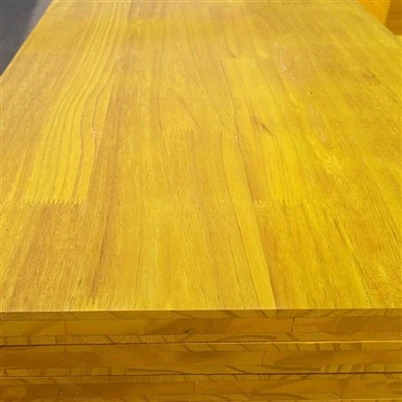
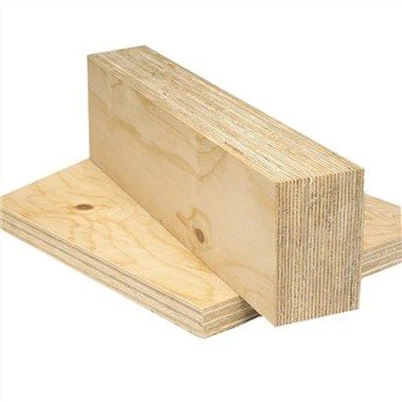
LVL is a composite wood product made by bonding thin layers (veneers) of sustainably sourced softwood or hardwood together under high heat and pressure. The manufacturing process begins with steaming logs, which are then rotary-cut into continuous veneers (typically 2–5mm thick). These veneers are dried to a controlled moisture content (8–15% at the time of despatch, as per Australian industry standards), coated with high-quality phenolic adhesive (compliant with AS/NZS 2754.1), and layered with their grain directions running longitudinally-this alignment maximises the product's strength and stiffness, while minimising the natural defects (such as knots, cracks, or warping) that plague traditional timber.
The result is a solid, uniform product that retains the natural workability of wood (it can be sawn, drilled, nailed, and routed like traditional timber) but offers far superior structural performance. Importantly, LVL is manufactured in Australia (with facilities such as Wesbeam's Neerabup plant in Western Australia) and is independently audited and certified to meet the rigorous requirements of local standards.
Australian Standards and Compliance for LVL Beam
In Australia, LVL used for structural applications must comply with the AS/NZS 4357 series-the primary standard for structural laminated veneer lumber. This standard (specifically AS/NZS 4357.0:2022, the current edition) specifies requirements for manufacturing, structural characterisation, dimensional tolerances, veneer and bond quality, and formaldehyde emissions, ensuring the product is fit for purpose in Australian building projects.
Additionally, LVL must be certified by recognised bodies such as the Engineered Wood Products Association of Australasia (EWPAA), which is accredited by JAS-ANZ (the Joint Accreditation System of Australia and New Zealand) to ISO 17065 and ISO 17021 standards. Certification by EWPAA confirms that the LVL meets the acceptance criteria of the National Construction Code (NCC)-Australia's mandatory building code-and is approved for use by state and commonwealth purchasing authorities.
A key point to note is that there are no standardised grades for LVL in Australian standards (unlike traditional timber grades such as F-grade or MGP-grade). Instead, manufacturers must determine the unique structural properties of their LVL through in-grade testing (compliant with AS/NZS 4063.2) and clearly communicate these properties to designers and builders-this flexibility allows manufacturers to engineer LVL for specific applications, but it also means care must be taken when comparing products from different suppliers.
Common Uses of LVL in Australian Construction
LVL's combination of strength, versatility, and compliance with Australian standards has made it a go-to product for a wide range of construction applications, particularly in residential building (where it is now widely used in trusses, frames, and flooring systems). Its main uses in the Australian industry include:
1. Structural Load-Bearing Components
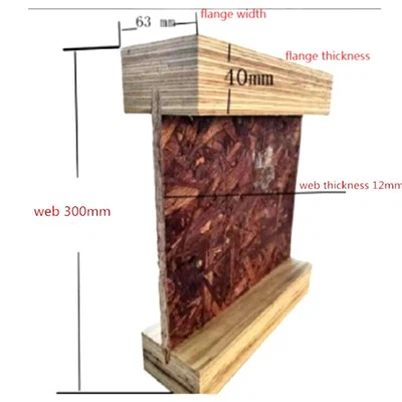
LVL is primarily used as a structural beam (often referred to as "LVL beams" or "e-beam LVL" in Australia) for floor bearers, roof rafters, and ceiling joists. Its high strength-to-weight ratio makes it ideal for spanning long distances without the need for additional supports-this is particularly valuable in modern open-plan homes and commercial buildings, where large, unobstructed spaces are desired. It is also used as the flange core for I-joists (a common component in floor and roof framing) and as columns, and truss members in both residential and commercial structures.
2. Formwork and Scaffolding
LVL is a popular choice for formwork and scaffolding systems in Australian construction sites, thanks to its durability and reusability. It is used as bearers, joists, and decking for concrete formwork, as it can withstand the weight of wet concrete without warping or failing. Its uniform size and strength also make it easier to assemble and disassemble, reducing construction time and labour costs.
3. Residential Framing and Finishing
In residential construction, LVL is widely used for wall framing, roof battens, and headers above doors and windows (to distribute loads and maintain structural integrity). It is available in a range of standard sizes (e.g., 35mm, 45mm, and 63mm thicknesses, with widths up to 400mm), and can be customised to suit specific project requirements-availability may vary by state, so it is recommended to contact local suppliers (such as Wesbeam or Australia Scaffolding & Formwork) for confirmation.
4. Treated LVL for Special Applications
LVL is also available in treated versions to enhance its durability in harsh Australian conditions. Common treatments include H2S (termite protection only, CodeMark certified), H2 (termite protection for indoor use nationwide), and H3 (termite and fungicide protection for outdoor, above-ground use). These treated products are ideal for applications where the LVL may be exposed to moisture or termite activity-particularly important in regions across Australia where termites are a common concern.
Key Benefits of LVL for Australian Builders and Designers
LVL's growing popularity in Australia is due to its numerous advantages over traditional timber and other building materials:
Consistent Performance: Unlike traditional timber, LVL has uniform structural properties (strength, stiffness, and dimensional stability) because it is engineered to eliminate natural defects. This consistency reduces the risk of structural failure and simplifies the design process for builders and engineers.
Sustainability: LVL is a sustainable choice, as it utilises timber veneers efficiently (the rotary-cut process generates a high yield, reducing waste) and is made from sustainably sourced logs. Its durability also means it has a long lifespan, reducing the need for replacement and minimising environmental impact.
Cost-Effectiveness: While LVL may have a slightly higher upfront cost than traditional timber, its durability, reusability (particularly in formwork), and reduced labour costs (due to easier handling and fewer defects) make it a cost-effective option over the life of a project.
Fire Resistance: LVL's high-density structure provides inherent fire resistance-when exposed to fire, the outer layer chars, protecting the inner core and retaining its strength for longer than traditional timber, which aligns with Australia's strict fire safety requirements in the NCC.
Flexibility: LVL can be manufactured in custom lengths, widths, and thicknesses (subject to transportation constraints), making it suitable for a wide range of applications-from small residential projects to large commercial and industrial builds.
Conclusion
In the Australian construction industry, LVL (Laminated Veneer Lumber) is more than just an acronym-it is a reliable, sustainable, and high-performance engineered wood product that has revolutionised how builders and designers approach structural framing, formwork, and load-bearing applications. Its compliance with Australian standards (AS/NZS 4357), certification by EWPAA, and alignment with the NCC ensure it meets the country's strict safety and quality requirements, while its versatility and cost-effectiveness make it a preferred choice for projects of all sizes.
Whether used in a small residential home's floor framing, a commercial building's formwork system, or an industrial structure's load-bearing beams, LVL offers the perfect balance of strength, workability, and sustainability-solidifying its place as a cornerstone of modern Australian construction.