

Acoustic MDF acoustic panels, commonly known as wood acoustic panels, consist of an MDF base that is subsequently modified through drilling and/or grooving, to which a finish and a black sound-absorbent veil are added. MDF or Medium Density Fibreboard offers a number of advantages for the manufacture of acoustic tiles.
Why Choose Us
Our Product
Our product range covers: Formwork LVL,Structural LVL, LVL scaffolding plank,LVL beam,I joist, LVL frame, LVL bed slat,LVL door core ,Acoustic panel.
Product Application
Our products can be used in construction,furniture ,packing such as pallet and interior decorative.
Production Market
Europe,North and south America,Austrilia,Newzealand, Middle East,Japan ,Korea and South east Asia, Our Annual Sales is more than 10M USD and increase year by year.
Production Equipment
10 LVL producing lines and 3 acoustic panel producing lines.


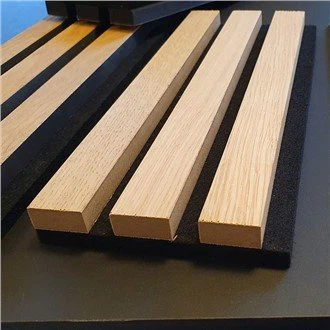
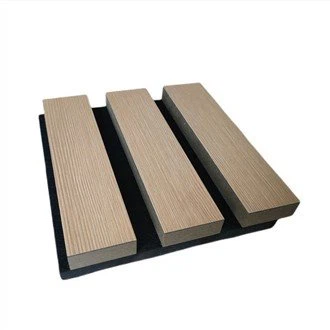
The Differences Compared of MDF Acoustic Panel
Now that we have explored the unique features of both acoustic slat wall panels and MDF slat wall panels, let's summarise the key differences between them:
Functionality
Acoustic slat wall panels: Designed to improve sound quality and reduce noise levels by absorbing sound waves.
MDF slat wall panels: Primarily chosen for their durability, versatility, and cost-effectiveness.
SOUND ABSORPTION
Acoustic slat wall panels: Engineered with specialised materials to provide excellent sound absorption properties, reducing reverberation and echo.
MDF slat wall panels: While MDF panels can contribute to some level of sound absorption, they are not specifically designed for acoustic purposes.
Aesthetics
Acoustic slat wall panels: Available in various designs, colours, and finishes, allowing for customisation and seamless integration with the overall interior design.
MDF slat wall panels: Can be customised and finished with a wide range of options, providing flexibility in design choices.
Strength And Durability
Acoustic slat wall panels: While they offer some structural support, the primary focus is on sound absorption rather than load-bearing capacity.
MDF slat wall panels: Known for their strength and durability, capable of supporting heavy items and enduring high-traffic areas.
COST
Acoustic slat wall panels: Generally, acoustic panels tend to be more expensive due to their specialised materials and sound absorption capabilities.
MDF slat wall panels: MDF panels are relatively cost-effective, making them a popular choice for those working within a budget.
The Versatility of MDF Acoustic Panel
Office Spaces
In today’s open-concept office layouts, controlling noise levels is paramount. MDF Acoustic Panels can be strategically placed on walls and ceilings to reduce sound reflections, resulting in a more focused and productive work environment. These panels can also serve as functional partitions, enhancing privacy and minimizing distractions.
Hospitality Settings
The ambience of a restaurant, hotel, or café heavily depends on acoustics. MDF Acoustic Panels can be customized to match the aesthetic theme of the establishment, contributing to a pleasant dining or relaxation experience for patrons.
Educational Institutions
Classrooms and lecture halls often struggle with reverberation and background noise. Installing MDF Acoustic Panels can enhance speech clarity and create an environment conducive to learning.
Applications of MDF Acoustic Panel




Furniture Making
MDF is a versatile material that can be used for a variety of furniture applications. It is often used for cabinet doors, drawer fronts, and other decorative elements. MDF board can also be used for furniture construction, such as for building bookshelves or creating custom storage solutions.
Interior Decoration
MDF can be used in a variety of ways in interior decoration. It can be used as paneling on walls, as wainscoting, or as baseboards. It can also be used to create built-in shelving or cabinets. MDF can be painted, stained, or left natural.
Kitchen Cabinets
MDF, or medium-density fiberboard, is a commonly used material for kitchen cabinets due to its strength, durability, and ease of maintenance. It is made from wood fibers and resin, creating a uniform and stable product that can be easily shaped and painted. MDF cabinets are also less likely to warp or crack over time compared to solid wood cabinets.
Bathroom Environment
MDF is an excellent material for use in bathroom environments due to its water-resistant properties. It is also very durable and easy to clean, making it ideal for use in wet or humid environments. MDF boards can be used for a variety of purposes in the bathroom, such as for bathroom furniture, cabinets, shelving, and even for flooring.
Exterior Cladding
MDF is commonly used in exterior cladding due to its durability and resistance to moisture. It is also easy to work with and can be cut, drilled, and routed to create custom designs. MDF can be painted or stained to match any home's exterior and is an affordable alternative to other cladding materials.
Doors
MDF is a versatile material that can be used for a variety of door applications. It can be used for the frames of both interior and exterior doors. It can also be used for the panels of doors, or as a veneer over a wood door. MDF is also a popular choice for doorjambs and doorstops.
Laminate And Veneer Finish
MDF is an ideal substrate for laminate and veneer finishes. It is stable, dimensionally stable, and does not warp or cup. It also provides a smooth, consistent surface for the laminate or veneer to adhere to.
Musical Instruments
MDF, or medium-density fiberboard, is a popular material used in the manufacturing of musical instruments such as guitars, drums, and keyboards. This is because MDF is a strong and durable material that can withstand the stresses and strains of regular use.
Speaker Cabinets
MDF is a good choice for speaker cabinets because it is a very dense material that minimizes vibration. It is also easy to work with and paint.
Model Railroad Scenery
MDF can be used to create a variety of model railroad scenery, including mountains, valleys, forests, and rivers. It is easy to cut and shape and can be painted or stained to create a realistic effect.
Composite Wood Products
MDF is widely used in composite wood products because of its high strength and stiffness, as well as its ability to be machined and finished to a high standard. It is also resistant to splitting and warping, making it an ideal material for use in furniture and cabinetry.
Maintenance and Care Tips for Acoustic Wall Panels
To ensure the continued performance and longevity of your acoustic wall panels, it is essential to follow these simple care tips:
Regular Cleaning: Dust and debris can accumulate on the surface of acoustic panels over time, affecting their sound-absorbing capabilities. Use a soft cloth or a vacuum cleaner with a brush attachment to gently remove any dust or dirt that has settled on the panels. Regular cleaning will help maintain their optimal performance.
Avoid Moisture: Acoustic panels are typically made of materials sensitive to moisture such as foam and fabric. Therefore, keep the panels away from areas with excessive humidity or moisture, as it can lead to damage and compromise their effectiveness. This is particularly important in environments such as bathrooms or areas prone to water leaks.
Check for Damage: Routinely inspect the panels for any signs of wear, tear, or physical damage. Look for dents, scratches, or loose edges. Damaged panels can affect their sound absorption capabilities and look a mess. If you notice any issues, promptly replace, or repair the damaged panels to ensure consistent performance.
Preventative Measures: Consider taking preventive measures to protect your acoustic wall panels from potential physical damage. For high-traffic areas, such as hallways or classrooms, consider only using panels that will not damage easily, such as PET Eco Felt. Placing the panels out of reach will also minimise the risk of accidental bumps or scratches impacting their functionality.

The Polyester Fiber MDF Acoustic Panel is a high-performance sound absorption solution designed to meet the needs of modern commercial and residential spaces. Made from a combination of polyester fibers and MDF board, these panels are highly effective in reducing noise levels and enhancing sound quality in large spaces.
The polyester fibers in the panel are resilient, making them durable and resistant to changes in air humidity and temperature. Additionally, the MDF board provides a rigid structure that makes the panels easy to install and maintain.
One of the most significant advantages of this product is its high-performance sound absorption capabilities. The polyester fibers in the panels are designed to absorb sound waves, reducing reverberation and echo in large spaces. As a result, the overall sound quality is enhanced, creating a more pleasant and comfortable environment for people to work, learn or relax in.
The Polyester Fiber MDF Acoustic Panel has excellent fire resistance properties, making it safe for use in a wide range of commercial and residential applications. This product has been rigorously tested and certified to meet industry regulations, ensuring that it meets all safety requirements.
This product is available in a range of sizes and thicknesses, making it suitable for use in a wide range of settings. It can be easily installed in various locations, such as conference rooms, auditoriums, restaurants, offices and other commercial or residential spaces.
The Polyester Fiber MDF Acoustic Panel is an ideal solution for anyone looking for a high-performance, durable and reliable sound absorption system. It provides excellent sound quality and fire resistance properties, making it a safe and cost-effective solution for any commercial or residential project.
Key Properties of MDF Acoustic Panel
Density
MDF has a relatively uniform and medium density, which contributes to its stability and ease of machining.
Smooth Surface
MDF offers a smooth and consistent surface, making it ideal for painting, veneering, and laminating.
Machinability
MDF can be easily cut, drilled, routed, and shaped using standard woodworking tools.
Dimensional Stability
MDF has minimal expansion and contraction due to changes in temperature and humidity.
Versatility
It can be used for various applications, from intricate designs to structural components.
Surface Finish
MDF holds paints, finishes, and veneers well, resulting in a polished final appearance.
Manufacturing Process of MDF Acoustic Panel
Fiber Preparation: Wood logs are debarked and chipped into small wood fibers using mechanical or chemical processes.
Fiber Refining: The wood fibers are refined and treated to improve their bonding ability and uniformity.
Blending: The refined wood fibers are mixed with resins and additives to create a homogeneous mixture.
Forming: The mixture is then formed into a mat on a forming line. This mat is subjected to heat and pressure to bond the fibers together.
Pressing: The mat is compressed between heated plates in a hydraulic press. High temperature and pressure activate the resin, bonding the fibers into a dense panel.
Cooling and Sizing: The compressed panel is cooled and cut into various sizes and thicknesses.
Finishing: The MDF panels may undergo sanding, edge trimming, and surface treatment to achieve the desired smoothness and finish.
Benefits of MDF Acoustic Panel
Lower Cost Than Wood
MDF boards will come at a cheaper cost than real wood, and can be laminated to give the appearance of genuine wood products.
Visual Choice
MDF can be stained, painted, or covered in veneers to give the impression of real wood. It is also far quicker to stain and colour than natural wood.
Smooth Appearance
MDF offers a smooth look, without any of the imperfections that can occur with real wood. It also will not fluctuate in size due to temperature to the same extent as wood.
Resistant to Insects
The chemicals used during the manufacturing process will give MDF resistance to insects like termites.
Environmentally Friendly
As MDF is made from discarded parts of the wood manufacturing process, it helps to minimise waste.
Easy to Drill and Cut to Size
MDF lacks grain, meaning you can easily drill into it without damage occurring. You can also use machines on it to cut it into a wide variety of shapes.
Our Factory
Linyi Huite International Trade Co.,Ltd was founded in 2015 year, after 7 years Development,now our company becoming a specialist in full chain LVL and acoustic panel.
Such as Formwork LVL, Structural LVL, Furnitural LVL,Packing LVL ,Wooded slatted acoustic panel and acoustic wall panel.


Certifications


FAQ
Q: Is MDF good for acoustic panels?
Q: How to seal MDF to make it waterproof?
Q: What is the difference between acoustic panels and soundproofing?
Q: What happens to MDF when it gets wet?
Q: Why is acoustic paneling so expensive?
Q: Does MDF board need to be sealed?
Q: Will acoustic panels soundproof a door?
Q: How do I know if my MDF is moisture resistant?
Q: How long do acoustic panels last?
Q: How waterproof is moisture resistant MDF?
Q: Are acoustic panels easy to install?
Q: How well does MDF hold up to moisture?
Q: What type of acoustic panel is best?
Q: How thick is moisture resistant MDF board?
Q: How do you make MDF moisture resistant?
Q: Does the shape of acoustic panels matter?
Q: What is the difference between a soundproof panel and an acoustic panel?
Q: Do acoustic panels make sound better?
Q: How thick should acoustic wall panels be?
Q: Where is the best place to put acoustic panels?
We're professional mdf acoustic panel manufacturers in China, specialized in providing high quality products with low price. We warmly welcome you to wholesale customized mdf acoustic panel made in China here from our factory. For quotation and free sample, contact us now.
Decorative Polyester Fiber Acoustic Panel Mdf, curved bed slat, Melamine Faced MDF Panel